Our Tea
What Is Hojicha
By Vale Staff
Hojicha is Japanese green tea, roasted until it turns nutty and toasty. Here is how it tastes, how much caffeine it has, and how Vale mills it in Seattle.
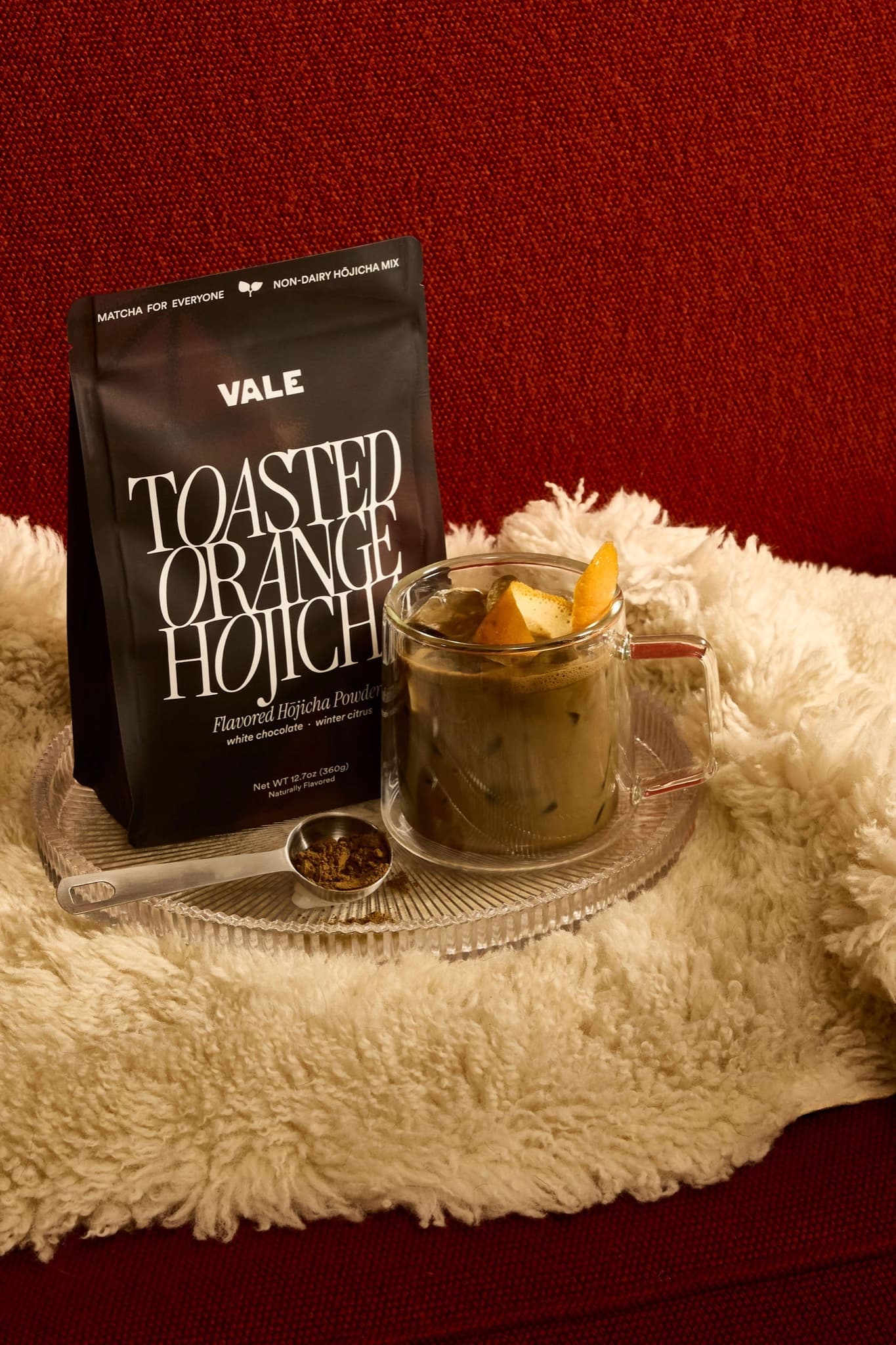
Hōjicha is Japanese green tea that has been roasted. The roast turns the leaves a warm brown and gives the cup a toasted, nutty flavor people often compare to roasted barley or cocoa. In Japanese the name is ほうじ茶, often written hojicha or hōjicha. You say it hoe-jee-cha.
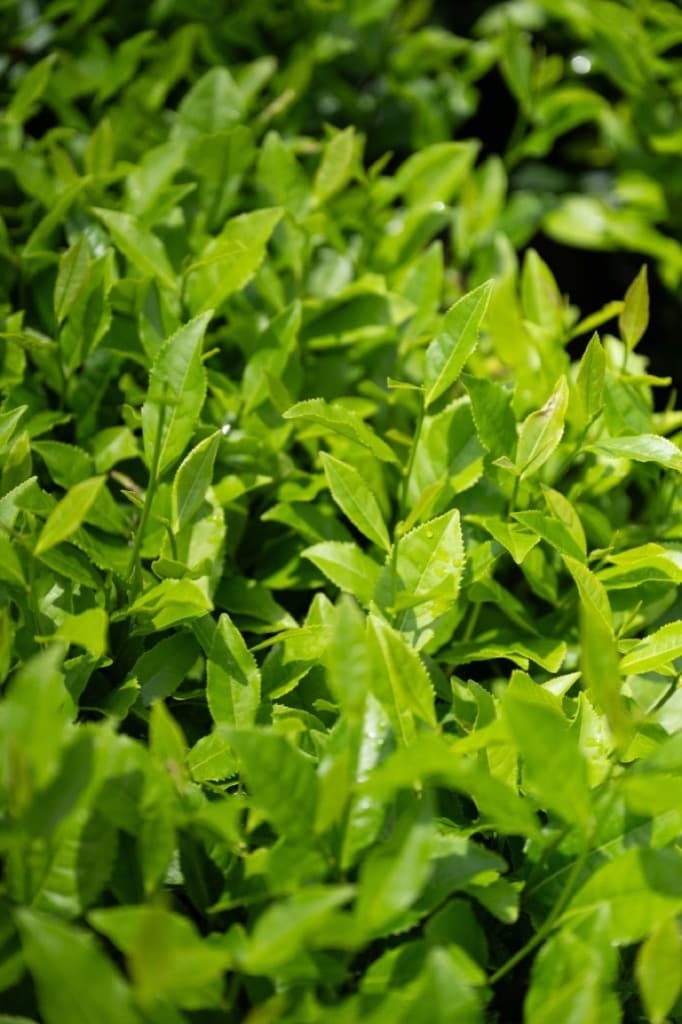
Most hojicha starts as later-harvest green tea, sometimes with stems mixed in. After steaming and drying, the leaves go into a roasting drum. Heat does the rest: the color shifts from green to amber, the grassy notes fade, and a little natural sweetness shows up in the cup.
How hojicha is made, and why we mill it in Seattle
Growers in Japan roast the leaf first. Some hojicha stays loose-leaf for steeping. Some is ground into a powder you can whisk or shake, the same way you prepare matcha.
Vale mills our own hojicha in Seattle. That last step is where a lot of the cup is decided: how fine the powder is, how evenly it mixes, and how consistent one bag is with the next. Doing the milling here means we can taste every batch and hold the grind where we want it, instead of taking whatever arrived in a finished pouch.
The leaf still comes from Japan. The mill is ours. That split is how we keep quality and consistency under one roof.
What hojicha tastes like
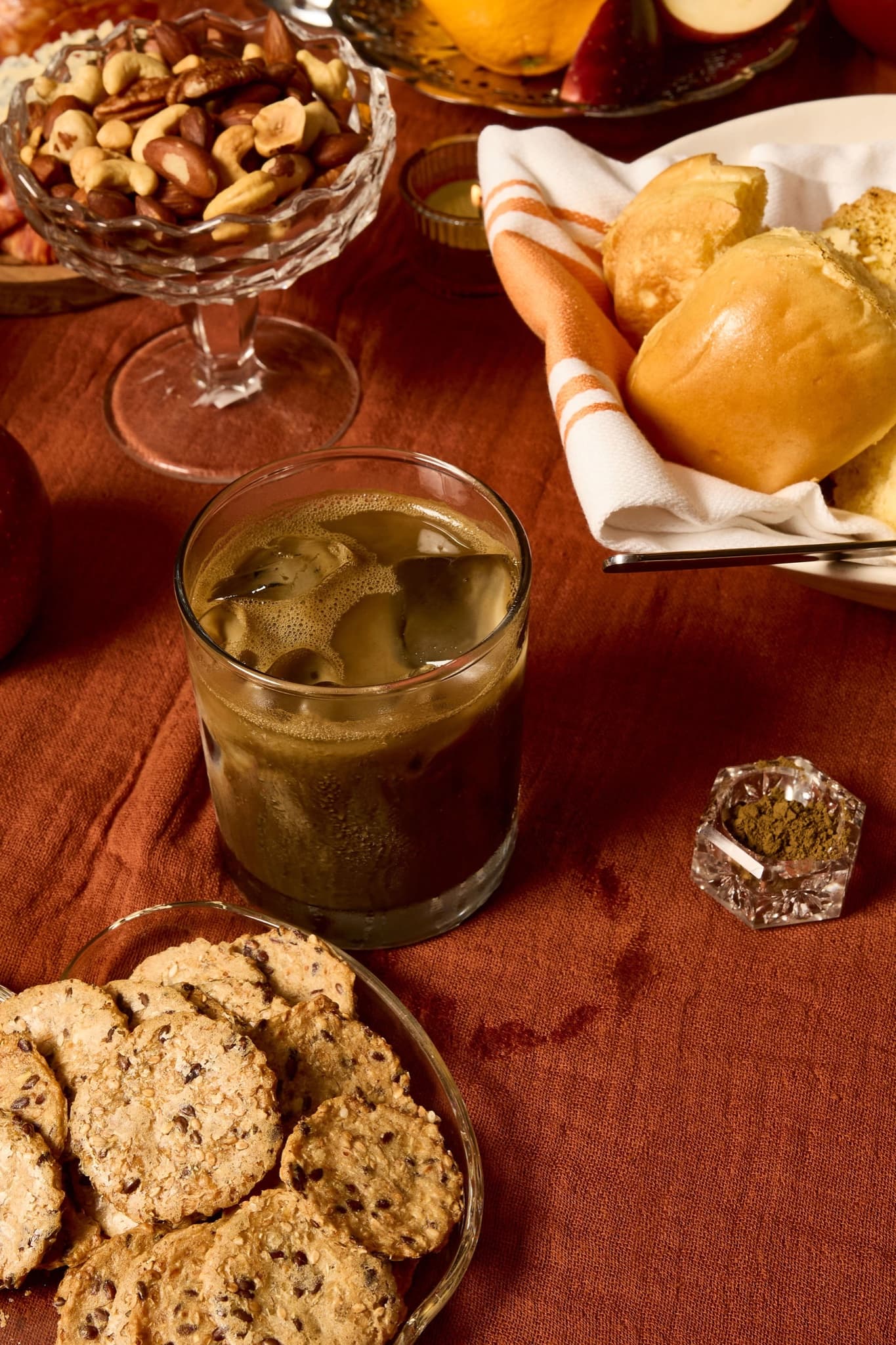
Hōjicha tastes warm and toasted. The first sip is often roasted grain or cocoa, then a clean, lightly sweet finish. There is very little of the grass or spinach note people expect from green tea. The liquor in the cup is amber or caramel, closer in color to a light coffee than to matcha.
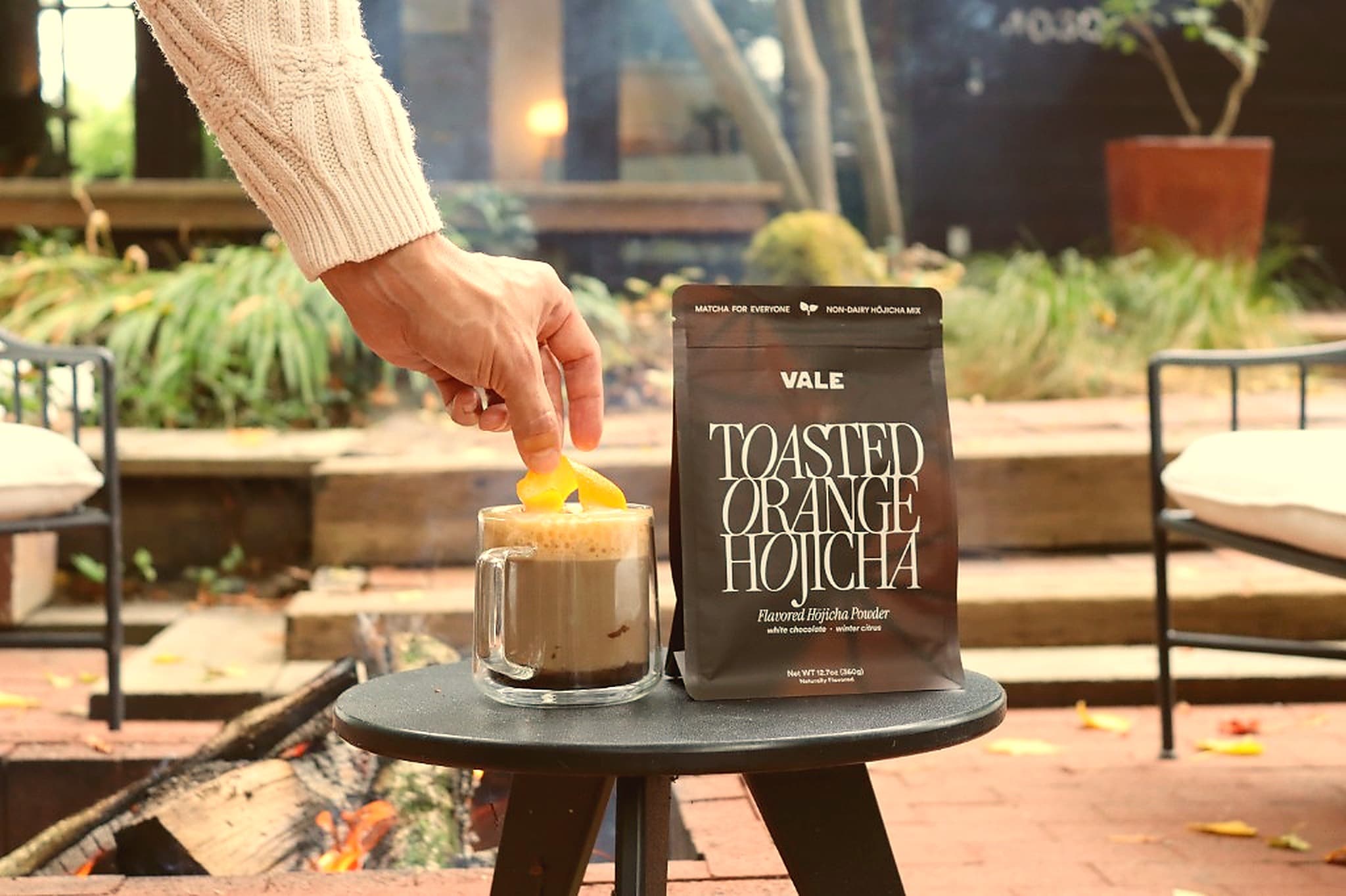
A hojicha latte is that same roasted tea with milk. The milk picks up the cocoa and barley notes and makes the drink feel closer to a light hot chocolate. Our Toasted Orange Hōjicha leans into that with white chocolate and winter citrus.
Does hojicha have caffeine?
Yes. Hojicha is still tea, so it has caffeine. The roast and the later-harvest leaf bring the amount down, which is why people reach for it in the afternoon or evening.
A typical cup of steeped hojicha lands around 10 to 30 milligrams of caffeine. Vale Toasted Orange Hojicha, which is a milled powder mixed with milk, has about 25 milligrams per serving. For comparison, a serving of our ceremonial matcha has about 60 milligrams, and a regular coffee is often closer to 95.
Hojicha is not caffeine-free. If you are sensitive, treat it as a milder tea and see how you feel. A lot of people drink it later in the day because the lift is gentler than matcha or coffee.
Hojicha and matcha
Hojicha and matcha both come from the Camellia sinensis plant. Matcha is shade-grown, steamed, dried, and milled so you drink the whole leaf. Hojicha is roasted, then either steeped as loose leaf or milled into a powder. The roast is why hojicha looks brown, tastes toasted, and has less caffeine.
People sometimes call hojicha roasted matcha. The plant is the same, and powdered hojicha is prepared in a similar way. The roast and the later harvest are what set the two cups apart.
How to brew hojicha, and how to make a latte
Loose-leaf hojicha is easygoing. Use water just off the boil, about one teaspoon of leaf per cup, and steep 30 to 60 seconds. You can go closer to two minutes if you want more body. The roast keeps it from turning harsh the way some green teas do when they sit.
For hojicha powder, use about one to two grams, a small teaspoon, in six to eight ounces of hot water or milk. Whisk or shake until it is smooth. For iced, shake the powder with cold milk or a splash of water, then pour over ice.
A hojicha latte at home is the same idea with more milk. Mix one to two teaspoons of powder with a splash of hot water until it is smooth, then add steamed milk. For iced, shake the powder with cold milk and ice. If you are using loose leaf, brew a strong cup with less water and pour it over milk.
If you want the Vale version, Toasted Orange Hōjicha is a non-dairy mix. Add your milk, shake, and you are done.

Is hojicha good for you?
Hojicha is still green tea, so it keeps some of the same plant compounds people look for in a daily cup. Roasting changes part of that profile and lowers the caffeine, which is the reason it works as an afternoon or evening drink.
If you already like tea for the ritual and a little lift, hojicha fits that same habit. Store the powder sealed, cool, and out of the light, and use it within a few months of opening so the roasted aroma stays vivid.
Hojicha questions
What is hojicha?
Hōjicha is Japanese green tea that has been roasted. The roast turns the leaves brown and gives the cup a toasty, nutty flavor. You can drink it as loose-leaf tea or as a powder mixed into water or milk.
What does hojicha taste like?
Hojicha tastes toasted and nutty, with notes of roasted barley and cocoa and a lightly sweet finish. The cup is amber, and it has very little of the grassy flavor people expect from green tea.
Does hojicha have caffeine?
Yes. A typical steeped cup has about 10 to 30 milligrams of caffeine. Vale Toasted Orange Hojicha has about 25 milligrams per serving. That is less than matcha or coffee, and it is still caffeinated.
Is hojicha caffeine free?
No. The roast brings the caffeine down, and some remains. If you want almost none, look for a decaf tea. Hojicha is a milder cup, not a caffeine-free one.
What is a hojicha latte?
A hojicha latte is roasted green tea mixed with milk. You can make it with hojicha powder or with a strong brew of loose-leaf hojicha poured over milk. It drinks warm and cocoa-like.
How do you make a hojicha latte?
Mix one to two teaspoons of hojicha powder with a splash of hot water until smooth, then add steamed milk. For iced, shake the powder with cold milk and ice. Vale Toasted Orange Hōjicha is a non-dairy mix you shake with the milk you already have.
How do you brew hojicha?
For loose leaf, use water just off the boil and steep 30 to 60 seconds, about one teaspoon of leaf per cup. For powder, whisk or shake one to two grams into six to eight ounces of water or milk.
How do you pronounce hojicha?
Say hoe-jee-cha. In Japanese it is ほうじ茶, from hōji, to roast, and cha, tea. In English you will see both hojicha and hōjicha.
Is hojicha green tea?
Yes. Hojicha is green tea that has been roasted after the usual steaming and drying. The plant is Camellia sinensis, the same plant used for sencha and matcha.
What is hojicha powder?
Hōjicha powder is roasted green tea that has been milled so you can whisk or shake it. Vale mills hojicha in Seattle so we can control how fine the powder is and how consistently it mixes.
Is hojicha gluten free?
Plain hojicha is roasted tea leaves, so it does not contain gluten. Check the label on flavored mixes, since other ingredients can vary.
Where can I buy hojicha?
Vale mills hojicha in Seattle. You can find our teas in the shop. Japanese grocers and tea shops also carry traditional loose-leaf hojicha.
Taste hojicha from our mill
We mill our hojicha in Seattle. Try Toasted Orange, our fall hojicha latte mix with white chocolate and winter citrus.