Vale Farms
Meet Gavin McFarlane, General Manager at Vale Farms
By Vale Staff
In Oak Harbor on Whidbey Island, Gavin McFarlane is doing something almost nobody else in Washington is doing: growing tea.
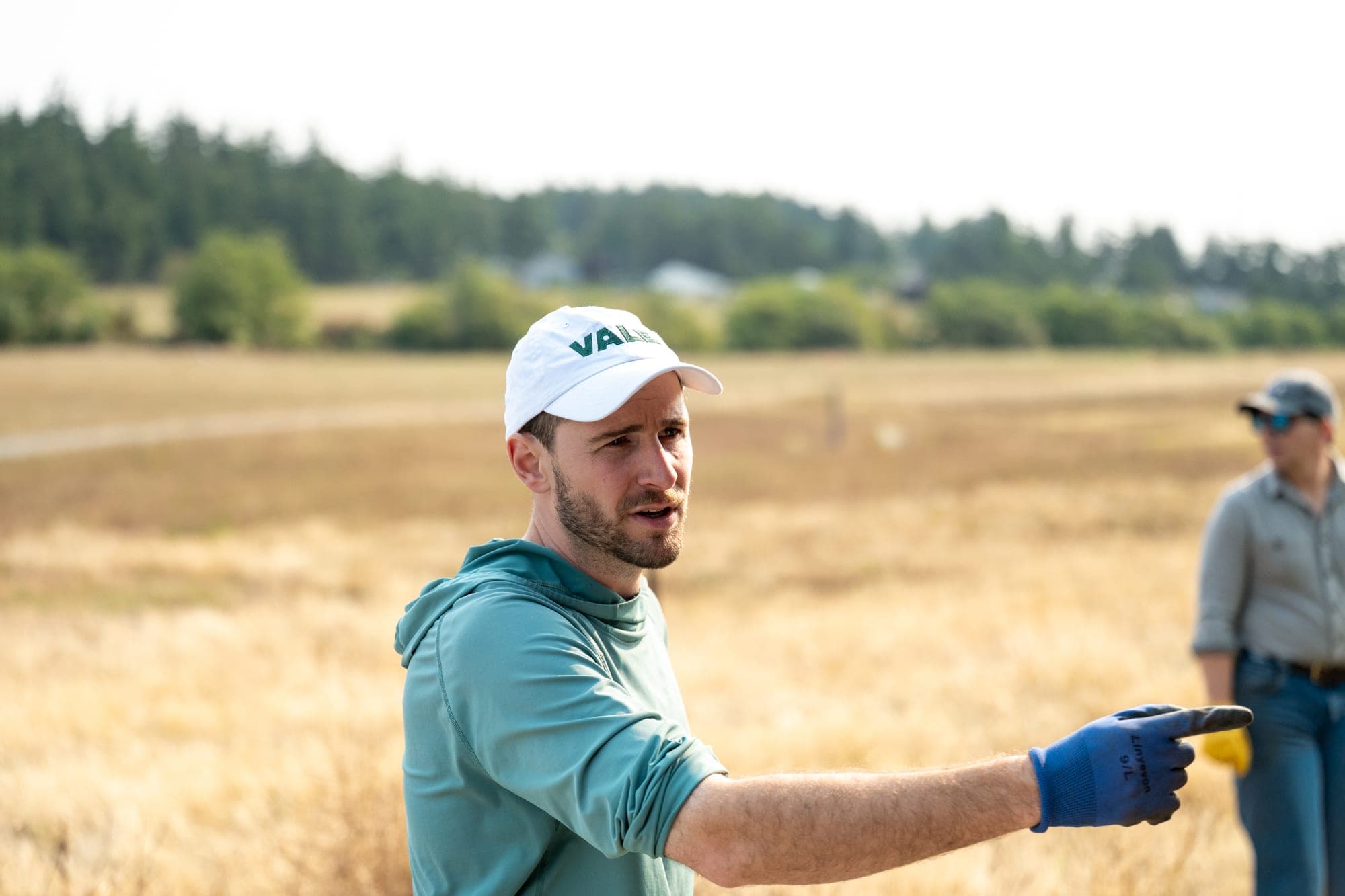
On a quiet stretch of Whidbey Island, in the town of Oak Harbor, Gavin McFarlane is doing something almost nobody else in Washington is doing: growing tea. As general manager of Vale Farms, he's spent this year turning open fields into the beginnings of what will become one of the only tea farms in the state. He's brought a decade of hands-on growing experience with him to do it.
A path that started in Japan
Gavin's tea story doesn't begin in Washington. It begins in 2016, when he traveled to Japan as a WWOOFer, a volunteer working on organic farms in exchange for room, board, and an education no classroom could offer. In Shizuoka, one of Japan's most storied tea-growing regions, he was welcomed by a local farming family just as they were heading into fall harvest. They put him to work alongside their equipment and their crew, and by the end of the season, it was clear he had a knack for it.
Finding young people willing to take on the physical demands of farm labor is a challenge in Japan, much as it is everywhere else, and the family Gavin worked with saw enough promise in him to sponsor his visa. What started as a short volunteer stint turned into more than three years of full-time tea farming in Shizuoka, and years that shaped the way Gavin thinks about cultivation, patience, and craft.
Back in the United States, Gavin carried that experience into a new role managing a tea farm in Salem, Oregon, where he spent the next five to six years deepening his knowledge of growing tea outside of Japan's traditional growing regions. The experience of building a tea operation from the ground up in unfamiliar soil and an unfamiliar climate is exactly what brought him north to Whidbey Island, and exactly what Vale Farms needed.
Where the farm stands today
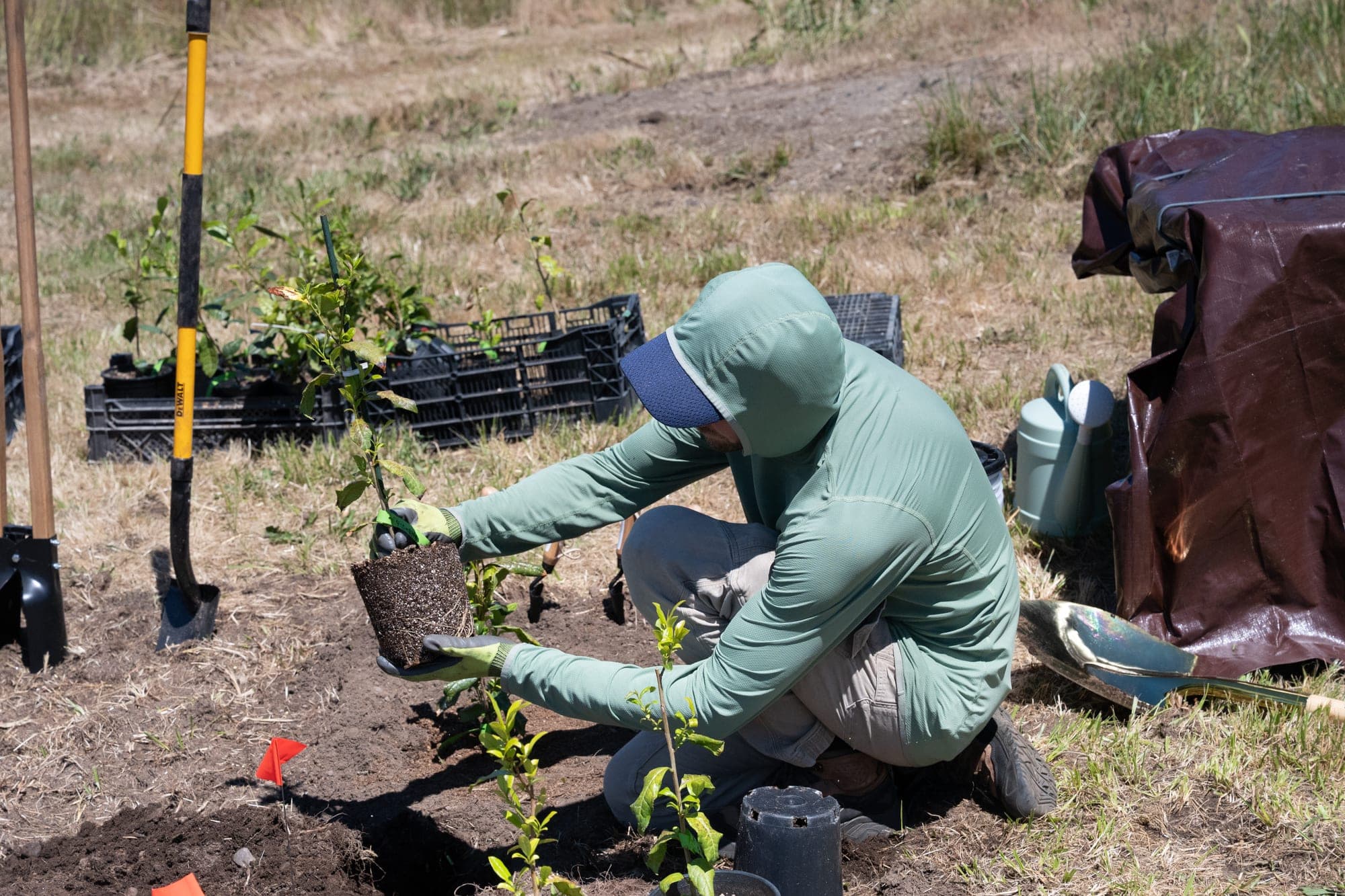
Right now, the work is refreshingly hands-on. Gavin and the Vale team are out weeding the first 100 tea plants, put in the ground together earlier this summer. A small but meaningful start to something much bigger. By the end of the season, the same field will hold 11,000 plants. Next year, growth accelerates further: roughly 100,000 additional plants across about 15 more acres. Once the farm is fully planted out, Vale Farms expects to be home to somewhere around one million tea plants.
It's a long game by nature. Tea takes patience; a plant needs a minimum of three years in the ground, and more realistically closer to five, before it's mature enough to harvest. For now, that means the daily work is about preparation: breaking up the dense glacial till that sits about a foot beneath the farm's rich topsoil, improving drainage and giving roots room to grow, working in soil amendments, and staking out neat rows spaced six feet apart, center on center. The plants go in, and then the real work of watching over them season after season, and year after year begins.
It's early days for Vale Farms, but for Gavin, that's part of what makes it exciting. A decade into his career growing tea, he's still at the beginning of something new.
Taste the matcha that started this story
Gavin learned to grow tea in Shizuoka, the same region our ceremonial matcha comes from.